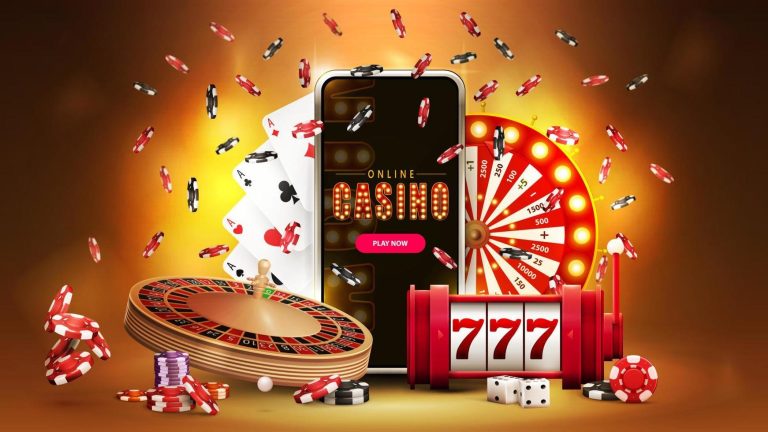
The role of visual and sound design in slot games
Let’s begin by exploring how graphics, animations, and sound effects generate excitement. Picture this: you hit a small payout, and confetti bursts across the reels, bells chime, and a playful jingle starts. Even a modest reward becomes a mini-celebration. Designers understand that these sensory cues don’t just accompany wins—they create them psychologically. Bright lighting effects, crisp animations, and punchy sounds together craft a narrative moment, where every spin can feel like a climax.
Now consider colors and thematic elements. A deep sapphire background suggests opulence, neon pink screams party energy, and lush greens evoke calm. Color psychology isn’t accidental—it’s the visual language of emotion. By pairing color schemes with specific themes—ancient Egypt, futuristic heist, tropical paradise—developers create an immersive story. Players don’t just play; they enter a world, and that emotional alignment makes modest wins feel significant.
Lastly, some designs elicit stronger emotional responses because they activate classical conditioning. When players Super88 repeatedly associate small wins with particular audiovisual cues, their brains begin to expect a jolt of pleasure—even if the payout is minimal. A flutter of confetti or a voiceover like “Nice!” primes a dopamine response before the win is registered. Over time, that anticipatory thrill becomes integral to the gameplay loop.
Game mechanics and reward structures
Next up: near-misses and frequent small wins. Research has shown these near-misses—when two jackpot symbols almost line up—activate reward centers nearly as much as actual wins (even though nothing is won!). That sense of “Almost had it!” can be more addictive than winning a small prize because it encourages players to believe success is imminent.
Then there’s volatility: whether a game pays out often but small, or infrequently but big. Low-volatility games deliver consistent small hits—perfect for maintaining engagement without peaks and troughs. High-volatility games are the opposite: you might chase a grand prize for hours only to strike big once. Emotionally, though, that jackpot feels life-changing. Which feels more rewarding? It depends on whether you chase momentary joy or long-term thrill.
Finally, bonus rounds, free spins, and extra features are goldmines for feel-good moments. They extend session length, diversify the gameplay loop, and layer surprise elements—like random multipliers or pick-to-win boxes. Even if these don’t significantly alter the return-to-player (RTP), they feel like exclusive events and can produce sustained excitement.
Psychological triggers in slot game design
The true engine behind addictive gameplay? Variable rewards. Drawing from studies dating back to B.F. Skinner’s experiments, varied reinforcement schedules (random but occasional rewards) produce the strongest compulsive behaviors. That’s why slot games rarely payout predictably—they make your brain chase unpredictability, never quite satisfied.
Then there’s anticipation. Dopamine doesn’t just fire during rewards; it fires leading up to them. That spinning sequence, that buildup in sounds and visuals—your brain is already calculating potential pleasure. Neuroscientific research confirms this: anticipation often triggers more dopamine than the actual outcome. Clever design exploits that, making every spin feel loaded with suspense.
Closely related is loss aversion and the sunk-cost fallacy. When we lose money, the pain feels sharper than gains of equal size. And once something’s spent, humans are wired to justify it.
Player behavior and cognitive biases
Players often perceive some games as luckier than others—and it starts with the illusion of control. Features like “hold the reels” or “pick your spin arc” don’t improve outcomes—but they make players feel influential. That sense amplifies the emotional payoff when something goes right.
Then come superstitions and rituals. Pulling a handle three times, tapping the machine, wearing “lucky socks”—acts with no objective impact, yet they create psychological comfort. By ritualizing the gameplay, players externalize control, giving structure to randomness.
Finally, cognitive distortions like the gambler’s fallacy (“After 10 misses, a win is due”) deeply influence play. Randomness doesn’t care about streaks, but humans instinctively perceive patterns. That bias leads players to expect impending wins—an expectation that game design can subtly encourage.
The impact of personal preferences and cultural influences
Theme resonance matters. A slot set in ancient Vietnam or featuring Norse gods connects deeply with players interested in those stories. That emotional identification can make small wins feel personally significant.
Similarly, cultural symbolism plays a huge role. In Chinese culture, an ‘8’ signifies fortune, and a dragon is luck incarnate. Slot developers often tailor games to regional audiences using familiar icons—gold coins and lanterns in China, scarabs and ankhs in Egypt, shamrocks and leprechauns in Ireland. When a culturally meaningful symbol appears, players experience strong emotional resonance—even on minimal wins.
Nostalgia amplifies emotional pleasure, making the gameplay loop feel more heartfelt and less mechanical.
The balance between skill illusion and randomness
Modern slots often integrate skill illusion—offering features like timing-based reel stops or symbol picks. Technically, outcomes remain RNG-driven, but players feel they can influence results. That perception can boost engagement dramatically.
Studies show when players believe they have control—no matter how illusory—the emotional reward feels stronger. Whether it’s a quick “Stop!” button or spinning a wheel, perceived control enhances the pleasure of near-misses and wins alike.
But there’s a warning here: deceptive design. When features mislead players into thinking skill matters, regulators raise concern. Blurring the line between chance and control risks crossing into manipulative territory—especially if vulnerable players chase non-existent patterns.
Industry trends and player feedback loops
Finally, the data revolution is transforming slots. Online casinos track every metric: spin frequencies, session length, feature engagement, and dropout points. Developers use this data to monitor how reward systems play out in real life—and they A/B test variations to maximize engagement. One demo might feature bonus rounds every 15 minutes; another might seed near-misses after ten losses. The variant that keeps players playing wins.
Player feedback is also shaping development. Reviews, social forums, and direct surveys inform tweaks. Did players enjoy the lightning bonus? Did small wins feel too trivial? Did the user interface frustrate them? Response-driven changes help refine the emotional “tightness” of reward systems.
But this raises a critical question: when does rewarding design tip into manipulation? Responsible game creators advocate for transparent RTP disclosures, cooldown reminders, time/money limits, and parental or self-exclusion tools. Ethically designed games aim to excite—not exploit.
Bringing it all together
In the end, why do some slots Slot Gacor simply feel richer, more rewarding, more vivid than others? It’s the alchemy of:
- Sensory immersion—visual themes, soundtracks, and animations that resonate emotionally
- Mechanical reinforcement—variable schedules, near-misses, volatility balance, bonus loops
- Psychological triggers—anticipation, dopamine, control illusion, bias exploitation
- Cultural and personal resonance—nostalgia, symbolism, theme affinity
- Data-driven fine-tuning—tracking, testing, refining reward moments
- Ethical boundaries—when satisfying design becomes predatory
When these elements weave together, gameplay feels meaningful. Even small wins carry weight. Near-misses promise potential. Bonus rounds feel like adventures. The result is a refined psychological hook: one that feels rewarding not because the money’s larger—but because the emotional architecture is.
Slot games sit at a fascinating intersection: technical randomness filtered through human emotion. Every chime, reel spin, and bonus animation plays a part in shaping your experience. Are you chasing wins or chasing meaning? Often, it’s both.